Magnetic Resonance Imaging (MRI)
What is a Magnetic Resonance Imaging (MRI)?
Magnetic Resonance Imaging (MRI) is a diagnostic test used to obtain detailed images of the internal structures of the body. This non-invasive test helps our team of expert radiologists diagnose a wide range of conditions, ensuring you receive the most precise and personalized care. Unlike other tests such as X-rays, MRI does not use ionizing radiation (a type of energy that can damage body cells), making it a safer option for many patients.
What does high-tech MRI offer?
Our high-tech MRI equipment offers advanced imaging techniques that allow us to detect and evaluate complex diseases with greater precision and speed, thanks to:
- Higher image resolution: allows for detailed visualization of soft tissues and detection of alterations not visible with X-rays or ultrasounds.
- Faster scan times: we reduce the duration of the test by up to 50% in some cases, which improves comfort and reduces anxiety.
- Advanced imaging techniques: such as functional MRI and spectroscopy, which provide additional information about tissue function and composition.
What does the procedure involve?
-
Preparation:
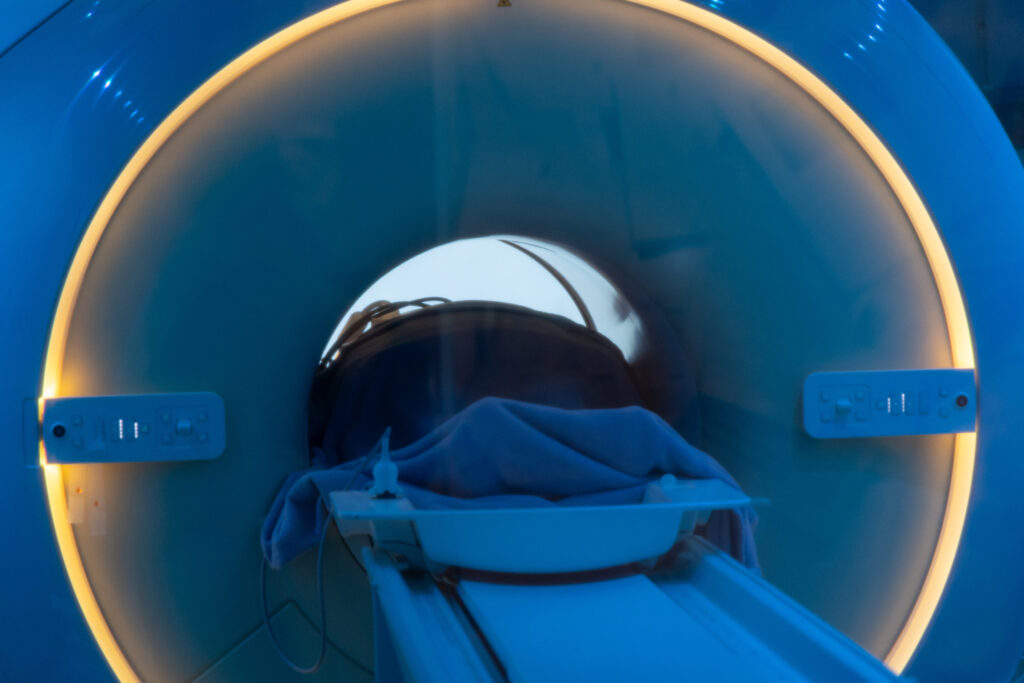
You will lie on a table that slides into a resonance tube (magnet).
-
During the test:
It can last between 20 and 60 minutes, depending on the area being examined. During the study, it is important to remain still to ensure image clarity. In some cases, a contrast agent will be administered intravenously to improve image quality.
-
Afterwards:
After the MRI, you can usually resume your normal activities. Our radiologists will analyze the images and provide a detailed report to your doctor. Your doctor will discuss the results with you and explain any necessary follow-up care and treatment options.
Recommendations for the test
MRI is generally a safe procedure. However, there are some risks and considerations:
- Claustrophobia: if you have a fear of enclosed spaces, you may feel anxious during the MRI. Talk to your doctor about options to help you relax, such as medication or an open MRI.
- Pregnancy: if you are pregnant or think you might be, inform your doctor, as MRI may not be recommended during pregnancy.
Are there any risks?
It is a safe technique, as it does not use ionizing radiation. However, the magnetic field can interfere with pacemakers or metallic prostheses. In case of contrast, there is a risk of allergic reactions or alterations in patients with chronic kidney failure.
For your test to go smoothly, we ask that you arrive in advance of your scheduled time. This will allow us to complete the necessary administrative and clinical preparation.
Before the test, we will provide you with the Informed Consent form, a document with important information that you must read and sign.
If your appointment is for a Magnetic Resonance Imaging (MRI), it is crucial that you inform us about the presence of pacemakers, metallic objects, prostheses (including dental ones), tattoos, or medication infusion devices, such as insulin pumps.
These diagnostic tests are very safe, but as with any medical procedure, there is a minimal possibility of incidence.